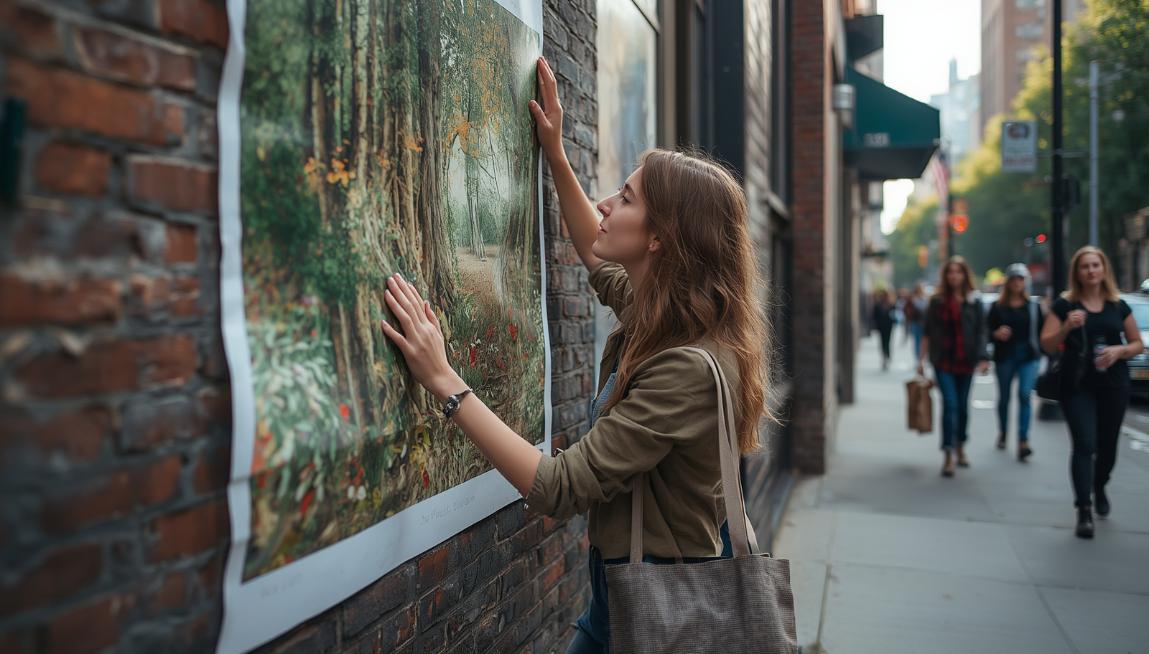
Poster Installation NYC Brings Ecology Book Publishers a Powerful Street-Level Voice

Every book on ecology starts with someone who thinks the world deserves to know more about the natural world. The hard part is getting that information from the pages to the places where people actually live. The ecology publishers’ secret weapon is poster installation NYC.
New York is loud, fast, and hard to pay attention to, but that is exactly what makes it the best place to reach people who will never step foot in a bookstore. A poster can stop someone mid-commute and introduce them to a book they have never heard about.
When Print Campaigns Meet the Public Commons
Ecology publishing has a visibility problem. These books are important, often time-sensitive, and very well made, but they tend to stay within academic circles and among readers who already believe in the cause. Print campaigns are the first step toward changing that.
Imagine an independent press that publishes a book on the migratory patterns of birds along the Atlantic Flyway. This press skips the social media buzz and review coverage entirely. Instead, the team puts up large posters around Lower Manhattan featuring birds in flight spread across the full image.
Almost no text clutters the design, just the book title, a short pull quote, and enough open space to make passersby stop and look. In the weeks that followed, local sales went up.
An editor involved in the campaign said, “We reached people we never would have reached online. Someone who commutes through Fulton Street every day might not follow any environmental accounts, but they saw that poster three times a week.”
Advocating for the Real World
Using real-world materials to advocate for the real world is part of what makes ecology publishing feel honest. Posters speak for a world that is fragile and grounded in physical presence, which is exactly what the books themselves argue for.
Eco-conscious and sustainable paper stocks have helped many of New York’s independent publishers bring their production choices in line with their message and values. The medium starts to carry the content.
The City as an Extended Library
What is happening now goes beyond a marketing trend. It reflects a genuine shift in how publishers with an ecological focus see public space. Travel corridors, gallery windows, café fronts, and community boards are treated as extra shelf space.
They give commuters, café regulars, and curious pedestrians a chance to stumble onto new ideas about the environment, especially those who were not looking for them in the first place.
New York has always been a city where ideas compete for attention in public. For ecology publishers, that dynamic is a feature, not a problem.
Books help people learn about ecology in ways they might never have expected, and the city, restless and curious as it is, turns out to be a surprisingly good place to start that conversation.